




Semiconductor Industry

High-Purity and Corrosion-Resistant Wastewater Treatment for Semiconductor Manufacturing

The semiconductor manufacturing industry generates highly complex wastewater containing hydrofluoric acid (HF), nitric acid (HNO₃), sulfuric acid (H₂SO₄), phosphoric acid (H₃PO₄), and alkaline cleaning agents, as well as heavy metals (Cu, Ni, Al, Zn) and fine particles of silica, SiC, photoresist, and slurry residues.
These waste streams are produced from etching, CMP polishing, photoresist stripping, and equipment cleaning processes, and require treatment systems offering exceptional chemical resistance, high precision, and long-term stability.

Deepflow provides high-purity wastewater treatment systems tailored for semiconductor fabs, wafer manufacturing, and IC packaging facilities.
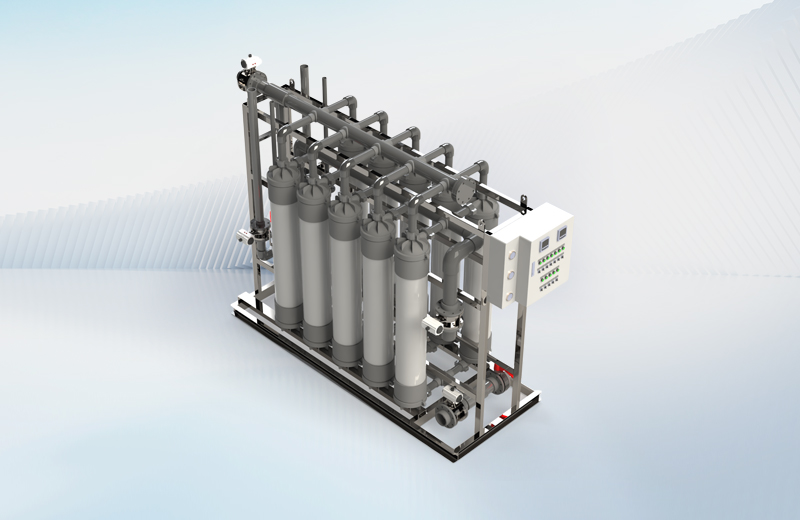
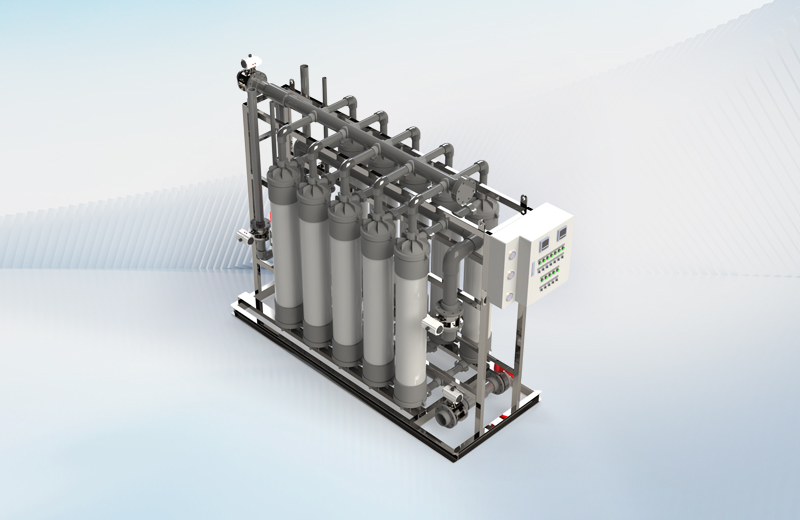
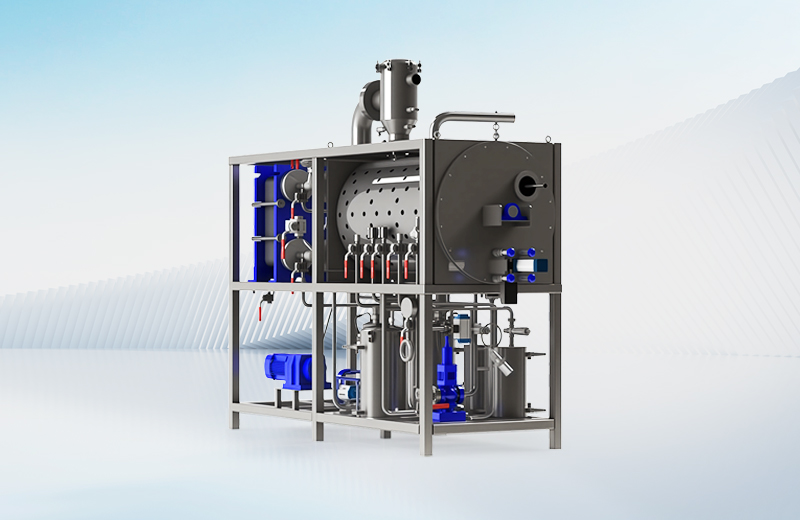
Our modular systems integrate RaeX neutralization and chemical precipitation, Seltra ultrafiltration and reverse osmosis, and Aevya or PFET evaporation to achieve reliable removal of pollutants and recovery of ultrapure water.
For facilities requiring Zero Liquid Discharge (ZLD), Vorkx crystallizers and RedGan dryers are incorporated to recover high-purity salts and minimize solid waste.
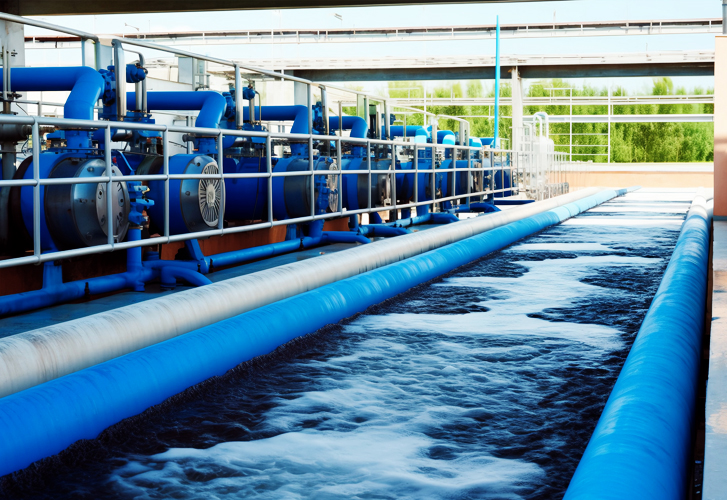
Reliable and Sustainable Solutions for High-Precision Processes

All Deepflow systems can be constructed using Titanium Grade 2, PVDF, PTFE, SiC ceramic components, or Super Duplex 2507, ensuring outstanding durability against mixed acids, alkalis, and abrasive slurries.
System configurations can be designed for segregated wastewater treatment (acidic, alkaline, metal-bearing, or organic) or combined neutralization and polishing, depending on fab layout and automation requirements.
These modular systems ensure stable operation, high recovery efficiency, and low maintenance, even under the most demanding semiconductor production conditions.

Typical Wastewater Sources
  • Etching and cleaning wastewater (acidic and fluoride-containing)
  • SiC wafer grinding and CMP polishing wastewater (abrasive particles and silica fines)
  • Photoresist stripping and developer wastewater
  • Alkaline cleaning and rinsing wastewater
  • Plating and metal finishing wastewater
  • Mixed acid and alkali drainage from tool and equipment cleaning
Process Flow

1. Equalization and buffering → flow homogenization and load balancing

2. RaeX neutralization and precipitation → heavy metal and fluoride removal

3. Seltra ultrafiltration and reverse osmosis → fine solids and dissolved solids separation

4. Aevya / PFET evaporation → concentration of remaining salts and water recovery

5. Vorkx crystallization → high-purity salt and by-product recovery

6. RedGan drying (DYS) → final drying and solid waste reduction

7. Distillate reuse → ultrapure water return for rinsing or tool cleaning

Your Advantages at a Glance
  • Efficient removal of fluoride, SiC particles, metals, and organics
  • High-purity water reuse for production rinsing and non-critical process loops
  • Complete resistance to HF, HNO₃, H₂SO₄, NaOH, and abrasive slurries
  • Modular integration of Seltra membrane + Aevya/PFET evaporation + Vorkx/RedGan solidification
  • ZLD-ready design with low operating cost and stable performance
  • Material options include Titanium Gr.2 / PVDF / PTFE / SiC ceramics / Super Duplex 2507
  • Compact, skid-mounted systems with full automation and minimal supervision
Recommended products
Q&A
  • Q
    Can RaeX automatically adjust chemical dosing based on real-time water changes?
    A

    Yes. Advanced RaeX systems use pH, conductivity, and turbidity sensors with PLC control to adjust reagent dosing dynamically.

    Q
    How is clarification efficiency evaluated?
    A

    It is assessed through turbidity, total suspended solids (TSS), floc quality, and retention time — by comparing inlet and outlet performance.

  • Q
    How should flocculant or reagent solutions be stored to maintain stability?
    A

    They should be kept in sealed containers, at stable temperature, away from light, and at consistent concentration to prevent degradation.

    Q
    How often should deep chemical cleaning be performed compared to routine CIP?
    A

    When standard CIP cannot restore performance or solids removal efficiency, a stronger chemical regeneration should be carried out.

  • Q
    How should polymers be mixed to optimize particle binding?
    A

    Begin with vigorous mixing to disperse the polymer, followed by gentle agitation to promote floc growth — the “bridging” principle.

    Q
    How does temperature influence floc formation?
    A

    Higher temperature accelerates reaction kinetics but may reduce floc stability and adsorption performance.

Do you have any other questions?
We are always willing to offer you assistance.
  • Tel
    183-1707-3986
  • Email
    info@deepfloweco.com
  • Add
    Building 3, No. 66 Jingche Road, Songjiang District, Shanghai
Customer Service WeChat

Copyright ©2025Deepflow Eco-Intelligent Manufacturing Co.Ltd.. All Rights Reserved沪ICP备11033222号-1 Powered by星云在线

  • Home
  • Tel
  • Mess
  • Top
  • Separation technology and energy recovery
    Achieve a sustainable future
    • Tel:
      183-1707-3986
    • Email:
      info@deepfloweco.com
    Customer Service WeChat
    Fill out the form below and we will contact you as soon as possible.